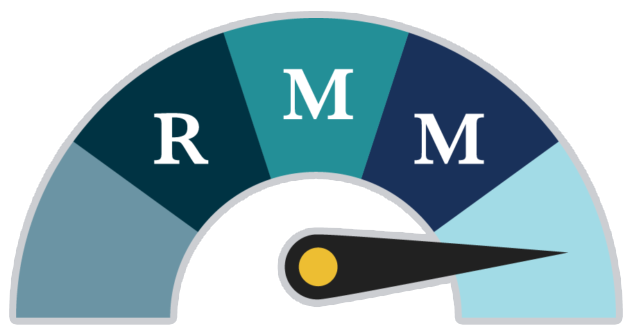
LogicManager's Risk Maturity Model (RMM)
The Industry Gave You Frameworks. The RMM Measures Reality.
Every new framework promises clarity. What you usually get is another layer of interpretation, a fresh round of disconnected mapping, another set of disconnected activities that make it harder to tell whether risk is actually being managed well.
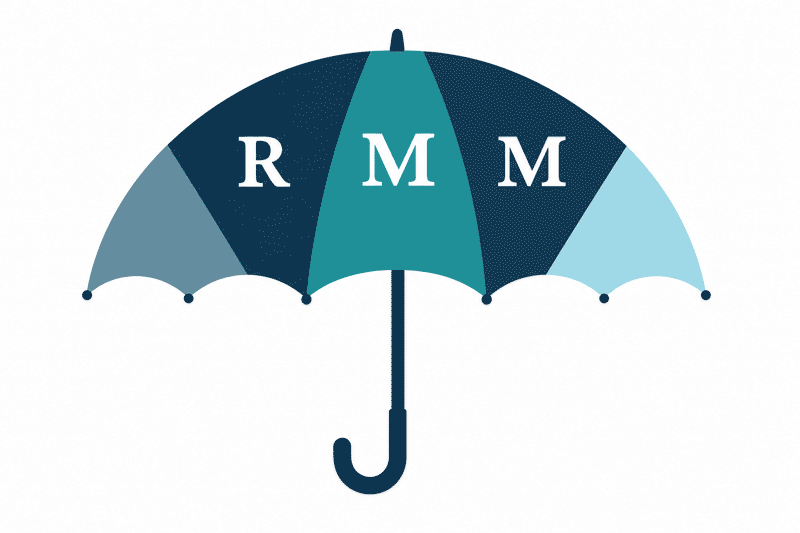
The Risk Maturity Model (RMM) is the "umbrella" framework that creates a common language. It doesn’t ask you to chase a new standard; it measures how effectively you’ve already adopted the ones you have. The RMM cuts through framework overload by showing whether your risk program is actually working in practice: connected across teams, supported by evidence, visible to leadership, and strong enough to improve business performance.

“Service is #1! Knowledgeable, professional, helpful and responsive Advisory Analyst! Still getting used to the program, but like that you solicit input from users and that upgrades are continual. Keep up the great work!” Assistant Vice President | Risk Management, Pacific Guardian Life
“In larger organizations, there is considerable “risk silo creation” and different progress in each. You helped us consider a common framework across our silos (eg Operational Risk, Digital Security, Crisis & Continuity Management, General Security etc).”
Stop Rebuilding Your Program Every Time the Rules Change
Acronyms change; underlying questions don’t. Whether it’s NIST, HIPAA, or ISO, auditors are always looking for the same 80%: Is there leadership oversight? Is ownership clear? Is the evidence repeatable?
The RMM provides the Universal Framework for these foundational truths. We help you address the 80% that frameworks have in common, so when a specific requirement changes, you’re ready to adjust without reworking everything. You don’t need to rebuild your program for every new acronym; you need a model that works across them all.

Frameworks Tell You What “Good” Looks Like.
We Tell You if You’re Actually Doing It.
A framework is a static list of “shoulds.” The RMM is a dynamic measure of “is.”
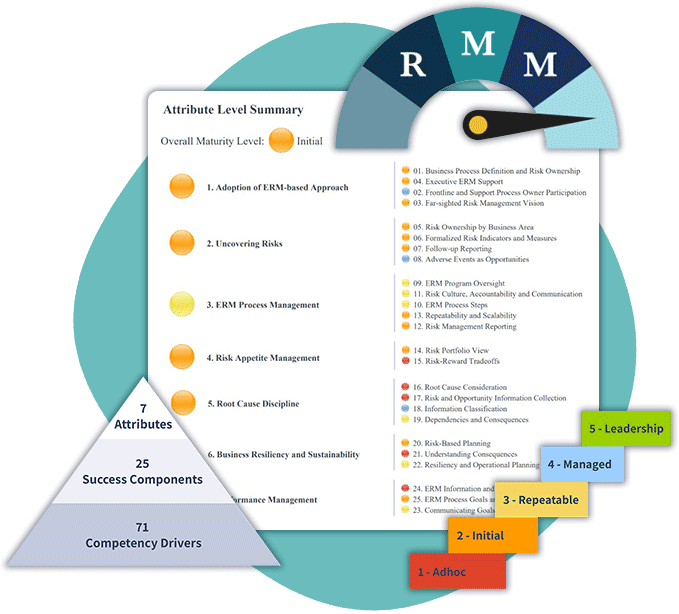
The model evaluates your organization across 7 attributes, 25 success components, and 71 competency drivers, then assigns it a maturity level ranging from ad hoc to leadership. We move you past compliance as a minimum standard.
The Compliance mindset:
“Do we have a policy?”
“Can we show the auditor a document?”
“Did we check the requirement?”
The RMM mindset:
“Is the policy working in practice?”
“Do people follow it consistently?”
“Can leadership rely on it to make decisions?”
That is the difference between having a binder on a shelf and having a defensible program.
Give the Board a Strategy, Not a Data Dump
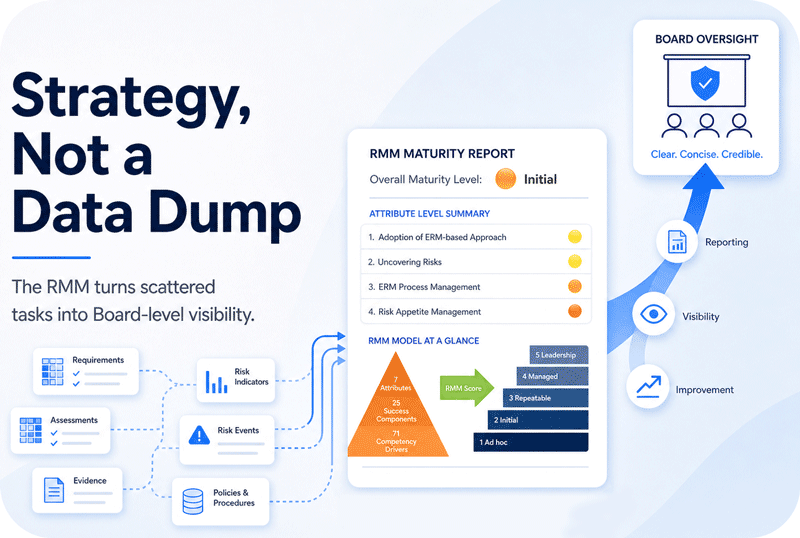
Boards don’t want a pile of risk data; they want a credible view of oversight strength. When things go wrong, the question isn’t “Did we have a policy?” It’s “Did we have visibility?”
The RMM turns scattered operational tasks into a high-level maturity index. It provides the summary reports Internal Audit needs to prove the program is functioning as a system, ensuring the Board sees a roadmap for improvement rather than just a list of problems.
This Isn’t About Checking Boxes Better—It’s About Going Beyond the Minimum Standard
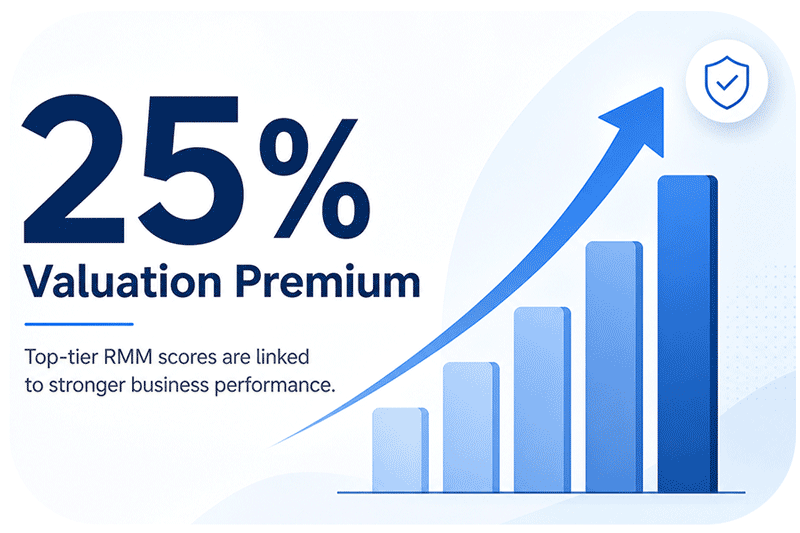
A “mature” program isn’t just about cleaner audits; it’s about business performance. Organizations with top-tier RMM scores don’t just survive audits. They command a 25% valuation premium* and lower cost of capital.
We identify your vulnerabilities not to check a box, but to unlock the performance metrics that build a more resilient, coordinated, and high-valuation organization.
*The Valuation Implications of Enterprise Risk Management Maturity, Queens University
Built From the Standards You Already Respect
You don’t have to choose between “following ISO” and “using the RMM.” Whether you use COSO, ISO 31000, or OCEG, the RMM is how you determine if those frameworks are actually working. It operationalizes your existing efforts into a scalable, auditable system. It’s the benchmark behind the mandates.
Complimentary DownloadInternal Auditor’s Guide to the RMM
Auditors use the Risk Maturity Model (RMM) Audit Guide to evaluate their organization’s risk processes within the Enterprise Risk Management (ERM) program’s charter. This guide provides an evidence-based framework, outlining 25 success factors and 71 competency driver standards, for audit teams to ensure accuracy and reliability in risk-related data and statements to support disclosures in 10K and 10Q reports. Here’s how auditors utilize the RMM Audit Guide:
Validation and Alignment
Auditors validate if the program aligns with the board’s risk appetite. They verify components like risk identification, assessment, mitigation, monitoring, and escalation processes to ensure reasonable care in oversight and prevent negligence, waste, and fraud.
Measuring Program Effectiveness
Using the RMM guide, auditors analyze metrics against industry benchmarks. This helps them gauge the organization’s program effectiveness and promptly address any concerns by implementing corrective measures.
Data Accuracy and Training
Auditors use the guide to train their teams, ensuring that reported risks meet fiduciary duty standards set by board members and leadership. Effective communication with regulators, external auditors, investors, and stakeholders is a key outcome of this approach.
Frequently Asked QuestionsFoundations of the Risk Maturity Model


One Assessment. A Lifetime of Actionable Intel.
With one structured assessment, you bypass the “mapping fatigue.” You receive a real-time, personalized benchmark report with actionable recommendations tied to your maturity level.
Use your results to:
- Benchmark against proven best practices.
- Expose the structural gaps that make your program reactive.
Communicate progress to leadership with data, not anecdotes.
Note: This is a limited free online assessment. The full version is included in the LogicManager ERM Program.