
This is a perspective from my role as ERM Program Manager at LogicManager. We’re sharing it during Internal Audit Month because internal audit plays a critical role in helping organizations connect findings, strengthen oversight, and turn risk insight into action. Risk management is not theoretical here. It shows up in how teams identify patterns, create visibility, support leadership and board-level decision-making, and move from oversight to insight.
May is Internal Audit Month, and it’s a good opportunity to pause and reflect on how the role of internal audit is evolving.
Traditionally, internal audit has been viewed as a function of oversight – validating controls, identifying gaps, and ensuring compliance. That foundation isn’t going anywhere. But in many organizations, it’s no longer sufficient on its own. The expectations have shifted.
Today, internal audit isn’t just assessing risk; it is uniquely positioned to connect the dots across the enterprise, often in ways no other function can.
The Challenge: Functions Own The Risks, But The Enterprise Bears Them
In most organizations, risk is still managed across separate functions:
- Finance monitors financial controls
- Security manages cyber risk
- Compliance tracks regulatory requirements
- Operations focuses on execution
Each function generates valuable insights. But too often, those insights remain isolated.
Audit findings get documented. Reports get shared. Issues get tracked. But it’s often difficult to see how one issue in one area could affect something much bigger somewhere else in the organization. That’s where the real gap starts to show.
Because risk rarely stays contained within one department. A vendor issue can become a compliance issue. A cybersecurity incident can quickly turn into an operational and reputational problem. What looks isolated at first usually isn’t.
And when visibility into risk is fragmented, the organization ends up reacting to symptoms instead of seeing the bigger picture.
The Opportunity: Internal Audit as the Enterprise Lens
Internal audit has a perspective that very few teams in the organization actually have.
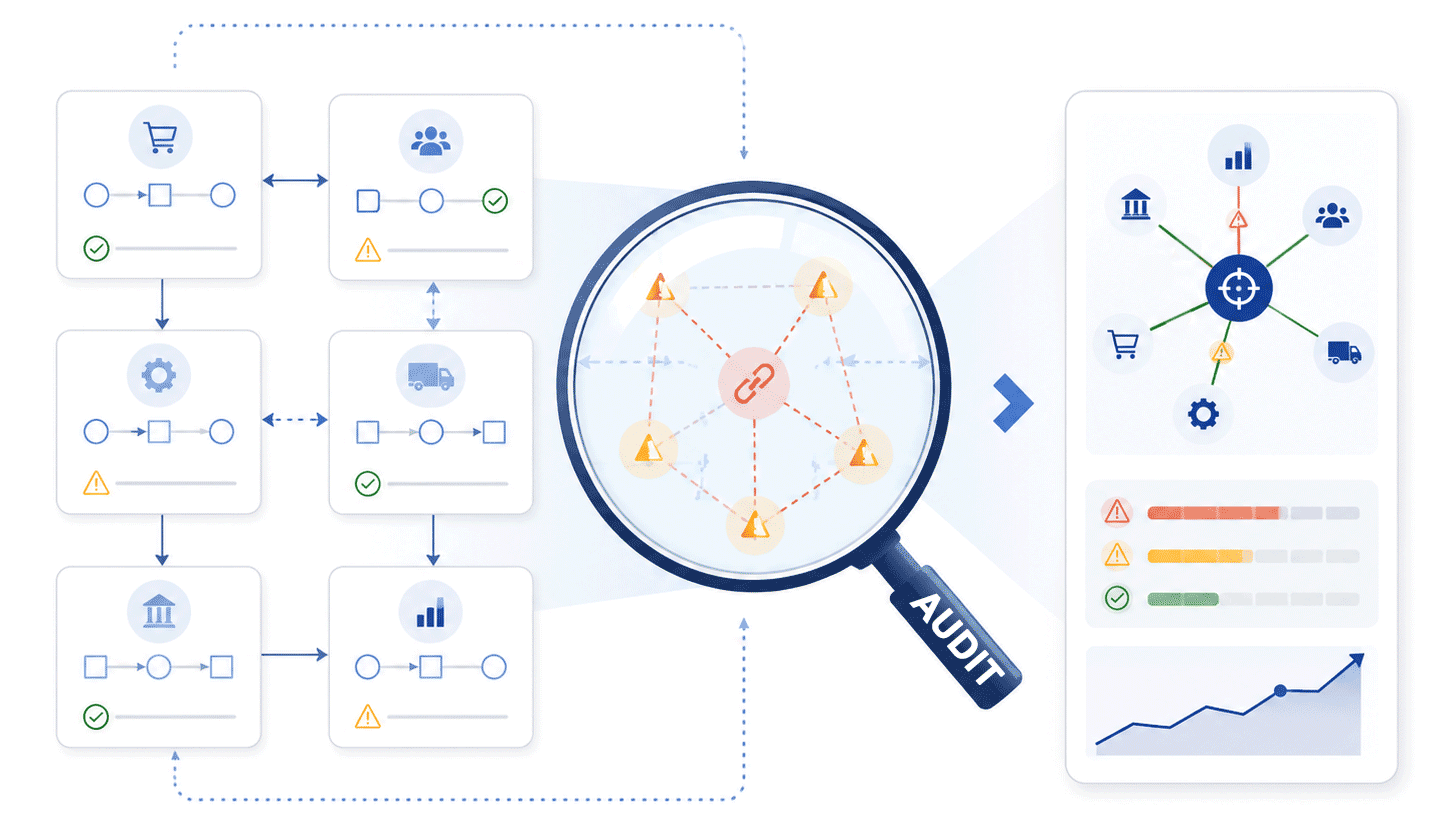
It sees how controls are working across departments. It notices the same issues showing up in different places. It sees where processes break down, where handoffs fail, and where small problems in one area could signal something bigger somewhere else.
And because audit sits across the business, it can often spot patterns that individual teams can’t see on their own.
That’s where the value really starts to expand.
Internal audit can help organizations understand how control gaps connect to broader business risks. It can also help leadership understand how operational issues tie back to strategic objectives. And it can turn scattered findings into a clearer picture of what’s happening across the organization.
In other words, an internal audit can move from simply identifying issues to helping the organization understand what those issues mean.
From Point-in-Time Reviews to Continuous Insight
Traditional audits have followed a pretty familiar rhythm: define the scope, complete the fieldwork, issue the report, track remediation, and move on to the next review.
And that approach still works. But at the end of the day, it creates a snapshot in time.
The problem is that risk doesn’t stand still. By the time an audit report is finalized, the business may have already changed. That’s why more organizations are starting to think beyond the traditional audit cycle.
The opportunity for internal audit is to help create a more continuous view of risk, one that connects audit findings back to the broader risk framework, stays aligned with compliance and operational teams, and gives leadership visibility into not just what happened, but what could be coming next.
That’s the shift – moving from periodic oversight to ongoing insight is what turns internal audit into a more strategic part of the organization.
How ERM Strengthens Internal Audit
This is where Enterprise Risk Management (ERM) becomes especially valuable. A strong ERM framework gives internal audit the structure and context needed to connect findings back to broader enterprise risk.
When internal audit is integrated into an ERM framework, organizations gain:
- A shared view of risk: Audit findings are no longer standalone observations; they are mapped to enterprise risks, providing context and prioritization.
- Consistent language and taxonomy: Different teams describe risk differently. ERM creates alignment, allowing audit insights to be understood across the business.
- Improved visibility and reporting: Leadership gains a clearer picture of how control gaps impact strategic objectives, not just operational processes.
- Stronger accountability: Ownership of risk and remediation becomes clearer when audit, risk, and business functions operate within the same framework.
This doesn’t mean internal audit owns enterprise risk management. But it does mean audit is uniquely positioned to provide independent visibility into how risks, controls, and operational realities connect across the business.
The Growing Visibility Gap in Modern Risk Management
Risk management has gotten a lot more complicated over the last few years.
Organizations are dealing with more systems, more data, more regulations and far more interdependencies between all of them. A single issue rarely stays isolated for long.
The challenge is that most teams still only see one piece of the picture.
Security sees cyber risk. Compliance sees regulatory exposure. Operations sees process breakdowns. Finance sees financial impact. Everyone has part of the story, but not always the full context around how those risks connect.
And in an environment this complex, disconnected risk insight creates blind spots the organization can’t afford to miss.
Internal audit is one of the few functions with visibility across all of those moving pieces. But stepping into that role requires more than traditional oversight. It requires audit to be more connected to the broader risk ecosystem – not just reviewing risk after the fact, but helping the organization see how it all fits together in real time.
From Audit Findings to Enterprise Insight
Internal audit has always been an important part of protecting the organization. That hasn’t changed. What has changed is the way organizations expect audit to deliver value.
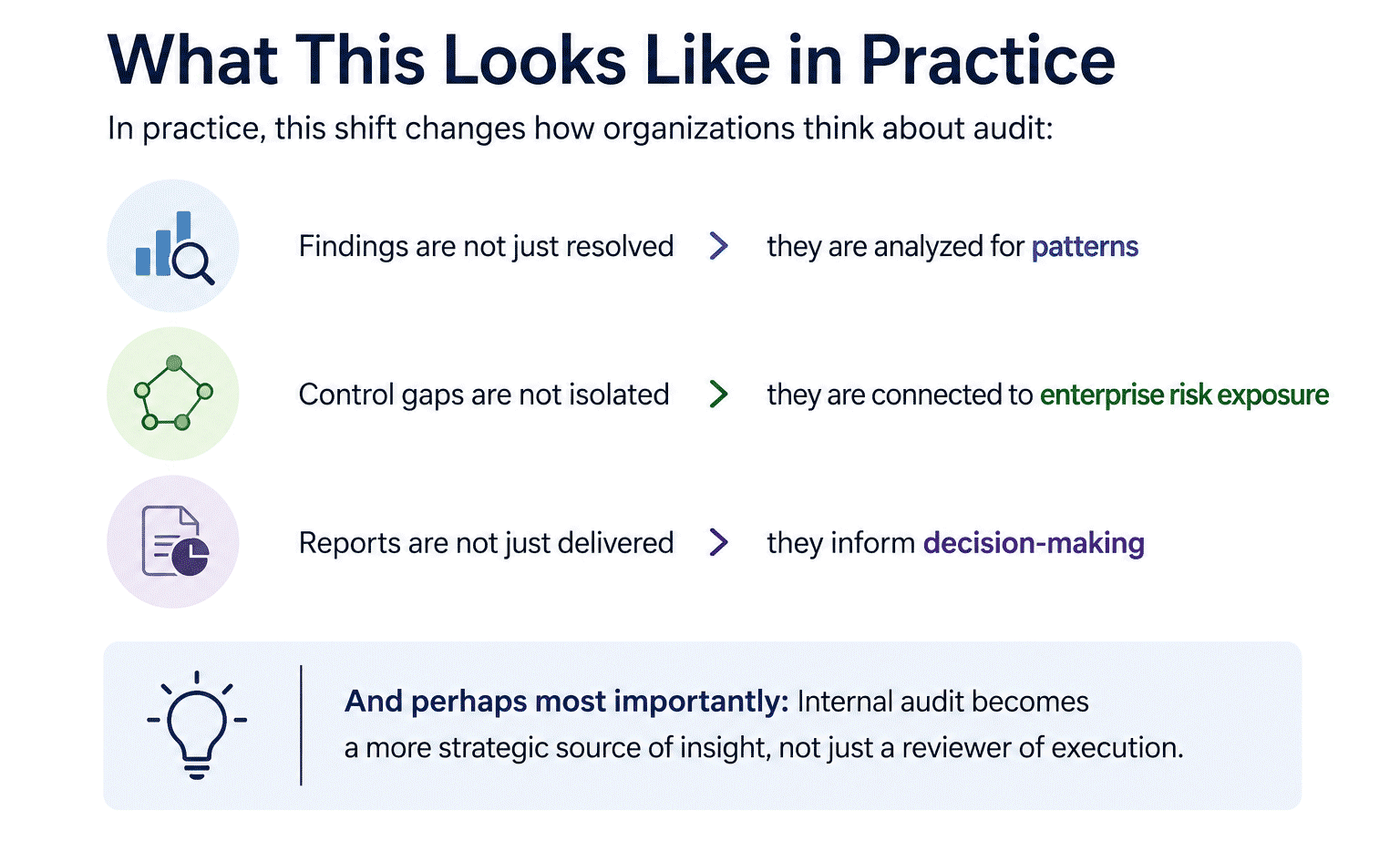
Today, it’s not just about identifying issues or documenting findings. It’s about connecting those findings across the business, aligning them to broader enterprise risks, and giving leadership clearer visibility into what matters most.
At LogicManager, this is the approach we take, helping organizations move beyond point-in-time reviews toward a more connected, continuous understanding of risk.
Because at its best, internal audit does more than identify issues. It helps organizations understand how risk connects across the enterprise and gives leadership the visibility needed to act with confidence.
Evaluating Audit’s Role in Risk Maturity
Looking for a practical way to evaluate how effectively internal audit is connected to your broader risk program?
Download the Internal Auditor’s Guide to the Risk Maturity Model to assess your current state, identify opportunities to strengthen oversight, and improve how audit insights are communicated to leadership.