Risk Assessments: A Practical Guide to Better Oversight
Learn how to conduct effective risk assessments with practical frameworks, templates, and connected workflows, and uncover the critical operational risks traditional assessments miss.
Risk assessments help organizations identify operational vulnerabilities, evaluate potential financial and regulatory exposures, and prioritize safeguards to protect strategic objectives.
As a foundational activity within an organization’s Enterprise Risk Management Program, risk assessments provide the structured evaluation needed to allocate resources effectively, satisfy audit mandates, and inform leadership decision-making.
Yet, completing an assessment questionnaire is not the same as managing enterprise risk.
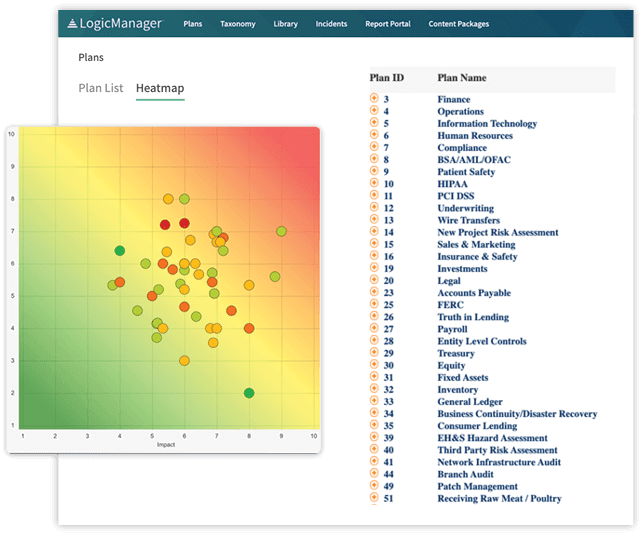
Organizations frequently complete every annual assessment, record hundreds of ratings in risk registers, and present colorful heat maps to executive leadership, only to be blindsided by operational disruptions.
Often, the vulnerability was not an unpredictable surprise or a failure of basic controls. Rather, the critical facts were already observed, documented, and managed inside one team, but never connected to the business leader responsible for acting on them.
We call these Unknown Knowns: critical risk information that exists somewhere in the organization but isn’t connected to the person responsible for acting on it.
Understanding how Unknown Knowns develop across departmental silos is the essential first step toward transforming risk assessments from a static compliance exercise into meaningful risk oversight.
What Are Risk Assessments?
A risk assessment is a structured, repeatable process used to identify, analyze, and evaluate events, dependencies, or conditions that could impede an organization’s ability to achieve its operational, financial, and strategic objectives.
Conducted across various business units, risk assessments, sometimes called Risk and Control Self-Assessments (RCSAs), are used to operationalize risk evaluations, or enterprise threat assessments, to help leaders prioritize resources and deploy proportionate mitigations.
A defensible risk assessment process must answer five foundational questions:
- What could happen? Identify specific risk events, systemic vulnerabilities, and external threats that could interrupt core business processes.
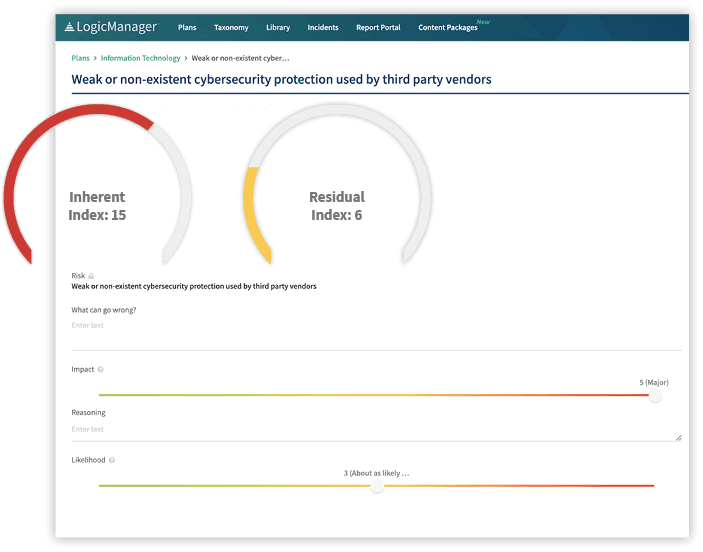
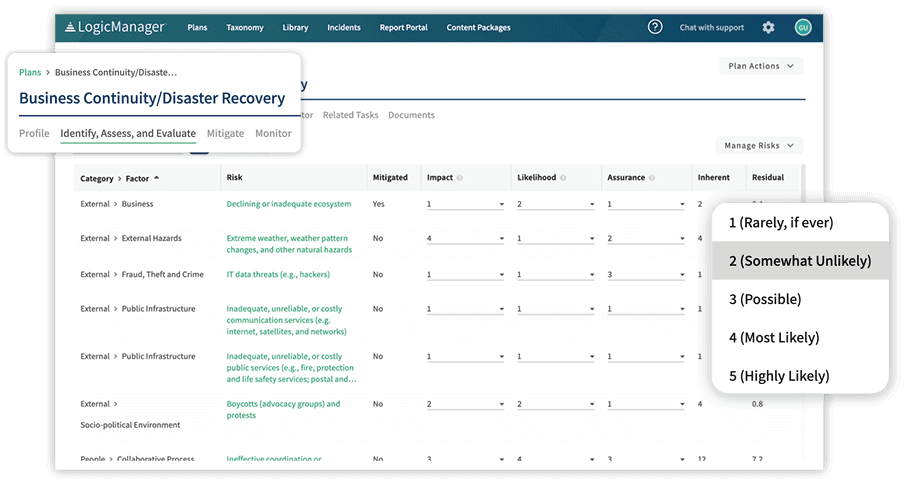
- What is the likelihood and impact? Evaluate both the probability of occurrence and the severity of operational, financial, reputational, or regulatory fallout using calibrated materiality criteria.
- What safeguards are in place? Inventory and assess the design and operating effectiveness of internal controls, policies, and procedural safeguards intended to mitigate the risk.
- What is the net (residual) exposure? Determine whether the remaining exposure falls within the board’s approved risk appetite once controls are accounted for.
- What actions and escalations are required? Assign accountable remediation owners, determine whether formal risk acceptance is justified, and establish monitoring triggers for leadership escalation.
The purpose of a risk assessment is not to populate a static spreadsheet to satisfy an annual audit. Its purpose is to deliver actionable, decision-ready intelligence to frontline managers and executive leadership.
Want to Go Beyond Static Risk Assessments?
Whether your team is overwhelmed by manual assessment coordination or seeking an integrated oversight framework, there are two distinct ways to move forward.
Explore Your Challenges — LogicManager Risk Clinic
Does managing risk assessments feel harder than it should?
Are you spending weeks chasing department managers across spreadsheets and emails? Struggling to normalize conflicting 1–5 scoring scales? Unsure which high-scoring risks actually threaten strategic enterprise goals?
The Risk Clinic helps risk champions diagnose common operational bottlenecks, uncover underlying operational silos, and identify where critical facts remain disconnected.
See a Better Approach — LogicManager Demo
Looking for an integrated, connected ERM solution?
See how LogicManager transforms fragmented risk assessments into a unified, cross-functional oversight engine.
Discover how linking business processes, risks, mitigating controls, incident histories, and executive reporting in a single system of record eliminates review fatigue while exposing cross-departmental dependencies.
How to Conduct an Enterprise Risk Assessment
Early-stage risk programs often falter by assessing risks in silos without a standardized framework. This leaves critical frontline insights hidden from leadership, leading to duplicated work and dangerous blind spots.
A repeatable assessment solves this by connecting three fundamentals: frontline ownership to identify risks at the execution layer, calibrated scoring to separate baseline exposure from residual reality, and automated handoffs to escalate findings to oversight teams. Learn how uncovering hidden risks starts at the operational level.
Follow this seven-step process to bridge operational risk with enterprise oversight:
| Step | Action Required | Oversight Rationale |
|---|---|---|
| 1. Establish Context & Objectives | Align the review with key business operations, revenue goals, and executive priorities. | Focuses attention on real business outcomes rather than building a generic list of worries. |
| 2. Identify Risks & Dependencies | Talk to frontline team leads to find practical pain points, vendor dependencies, and operational roadblocks. | Catches blind spots by asking the people doing the day-to-day work where things break down. |
| 3. Inherent Risk Scoring | Estimate how likely a problem is and how much damage it would cause if no safety nets existed. | Creates an honest baseline of what is at stake before assuming current safeguards will save the day. |
| 4. Control & Cross-Team Validation | Confirm existing tools, backup plans, and safety checks are running as intended across departments. | Prevents false confidence by checking real data, like recent system outages, audit notes, or vendor issues, instead of relying on assumptions. |
| 5. Residual Risk Evaluation | Re-evaluate the leftover danger after accounting for working safeguards, and check if it exceeds acceptable levels. | Separates normal business hiccups from critical issues that require executive intervention. |
| 6. Mitigation & Action Planning | Assign specific fixes to named owners with clear deadlines and the budget or staff needed to deliver. | Guarantees accountability so teams actually fix vulnerabilities instead of just logging them on a spreadsheet. |
| 7. Continuous Monitoring & Reporting | Set up early-warning alerts such as Key Risk Indicators (KRI’s) and triggers that prompt an immediate check-in when business conditions change. | Replaces the outdated annual review with continuous, responsive oversight. |
Risk Assessment Execution Checklist
Use this operational checklist to evaluate whether your current assessment lifecycle supports effective oversight:
- [ ] Every assessed risk links to an approved business process, asset, or strategic objective.
- [ ] Impact criteria are calibrated with objective metrics (e.g., dollar loss, downtime hours, regulatory penalties) rather than subjective labels.
- [ ] Operational dependencies across IT infrastructure, third-party vendors, and shared facilities are explicitly documented.
- [ ] Mitigating controls are independently validated, citing recent testing or operational metrics rather than self-reported assertions.
- [ ] Risk scoring criteria are standardized across all departments to enable meaningful roll-up reporting.
- [ ] Remediation plans have a single named process owner and an approved completion date.
- [ ] Defined change triggers (e.g., material system changes, vendor breaches, major regulatory revisions) automatically initiate an out-of-cycle reassessment.
- [ ] Residual exposures exceeding risk appetite are formally escalated to executive leadership for documented acceptance or mitigation funding.
Not sure where to start? Download our Risk Assessment Template
How Can Risk Assessments Be More Efficient?
For many organizations, the primary frustration is the administrative overhead of the assessment cycle. Risk teams spend weeks distributing spreadsheets, emailing reminders, and manually consolidating conflicting matrices into executive presentations.
Workflow automation streamlines this administrative burden by:
- Automating Distribution & Handoffs: Routing questionnaires directly to designated process owners based on organizational hierarchies and predefined schedules.
- Centralizing Assessment Records: Eliminating scattered email chains and disjointed spreadsheets by storing scores, historical changes, and documentation in a centralized repository.
- Triggering Intelligent Escalations: Automatically alerting risk owners and managers when deadlines approach or when assigned reviews stall.
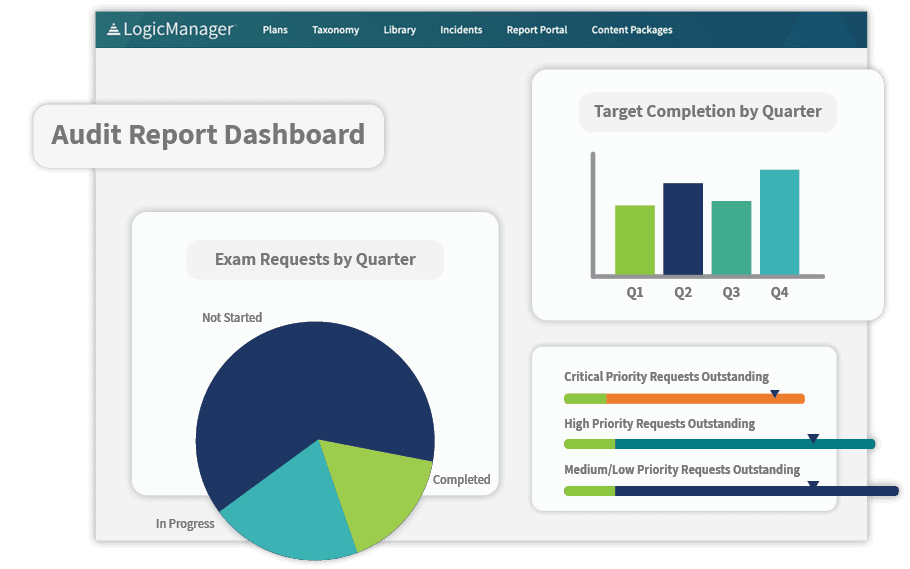
- Standardizing Roll-Up Reporting: Instantly aggregating departmental ratings into board-ready dashboards using consistent enterprise taxonomies.
However, accelerating a disjointed process does not improve risk oversight.
Speeding up the distribution of static questionnaires allows teams to collect incomplete data faster, but it fails to address structural blind spots. If a process owner rates an operational process as “Low Risk” while IT is actively managing recurring outages on the underlying application, an automated questionnaire merely accelerates the delivery of false assurance.
Efficiency must serve oversight. Real efficiency is gained when risk assessments reuse shared operational facts, such as central vendor inventories, existing control evaluations, and incident histories, so frontline teams spend less time entering data and more time evaluating substantive exposure.
What Could Risk Assessments Overlook? The Unknown Knowns
Consider this fictional scenario showing how an organization can follow every assessment step correctly and still miss a major operational vulnerability.
A. The Situation
A regional health network runs several diagnostic imaging centers and a central online portal for booking patient appointments. Like many healthcare organizations, company policy requires every department to complete an annual Risk and Control Self-Assessment (RCSA).
Marcus, the Director of Outpatient Operations, conducts the annual review for patient scheduling. He evaluates the risk of system downtime and appointment backlogs.
Looking back over the prior twelve months, everything ran smoothly. System uptime was over 99 percent, patient complaints were minimal, and intake targets were met. Marcus knows the booking portal is supported by a backup database designed to take over automatically if the main system ever fails. Confident in that safeguard, Marcus marks the backup control as fully effective and rates the residual risk as Low. His assessment is approved and added to the executive risk summary.
B. The Overlooked Risk
Two months before Marcus started his assessment, the IT Infrastructure team began a planned upgrade to move imaging records to the cloud.
During system testing, the IT team noticed an issue: when more than 1,200 patients used the portal at the same time, the automatic backup process caused the database to crash.
To keep the system running during the upgrade, the systems administrator turned off the automatic backup switch. If the main database failed, IT would have to restart it by hand. The administrator logged the change in an internal IT help-desk ticket, noting that it was a temporary fix until a permanent software update arrived next quarter.
Neither team connected their notes. Marcus evaluated his operations assuming the automatic backup was live. IT handled the technical patch without knowing that Marcus’s emergency patient intake plan depended on the system recovering in four minutes or less.
C. Where Was the Unknown Known?
The facts needed to spot the vulnerability were already documented, but they stayed trapped inside departmental silos:
| Team | What They Knew | What They Did Not Know |
|---|---|---|
| Outpatient Operations (Marcus) | Patient scheduling was running smoothly. Rated the operational risk as Low based on the belief that automatic database backup was active. | IT turned off the automatic backup two months earlier to prevent a system crash. |
| IT Infrastructure | The automatic backup was turned off. Restoring the database manually would take between 6 and 8 hours. | Outpatient Operations had an emergency patient intake recovery goal of 30 minutes. |
| Software Vendor | The database connection software was outdated and required an upgrade to support automatic backups during peak volume. | The health network’s purchasing team paused the license renewal while waiting for budget approvals. |
| Enterprise Risk Team | The annual assessment was complete. The outpatient risk was officially reported to leadership as Low. | The primary safeguard protecting patient booking was currently switched off. |
This breakdown did not happen because someone failed to do their job. Outpatient Operations completed their review on time, and IT properly logged the temporary maintenance change.
The Unknown Known was the invisible connection between Marcus’s risk rating and IT’s temporary change. The critical facts existed, but they were never shared with the leader who needed them to make an informed decision.
D. What Could Happen?
On a busy weekday morning, an unexpected network glitch knocks the primary database offline. Because the automatic backup is turned off, the secondary system does not take over.
Instead, the patient intake portal freezes completely. Clinics cannot view imaging appointments or check in arriving patients.
Doctors and staff are forced to switch to pen and paper. Long lines form, urgent diagnostic scans are delayed, and time-critical surgical cases must be rerouted to competing hospitals. Because IT has to rebuild and restart the database by hand, recovery takes seven hours instead of four minutes. The network suffers lost patient revenue, regulatory compliance inquiries, and lasting reputational damage.
E. What Would Better Oversight Look Like?
Connected enterprise oversight links risks directly to everyday operations, active safeguards, and technical changes:
- Clear Connections: In the central ERM system, the business activity (Patient Scheduling) is linked directly to the technical asset (the Database) and its key safeguard (the Automatic Backup Routine).
- Real-Time Status Updates: When IT logs a ticket to turn off the automatic backup, the control owner is immediately notified to ensure IT understands the impact on the safeguard and that any interruption is minimal.
- Automatic Alerts: The outpatient risk profile detects the inactive safeguard, recalculates the net risk rating, and alerts both Marcus and the IT lead.
- Coordinated Solutions: Marcus and IT leadership quickly agree on a temporary workaround, such as keeping dedicated technical staff on call during morning peak hours while fast-tracking the vendor software fix.
- Clear Leadership Visibility: Senior executives see an accurate picture of operational risk, knowing the appointment portal is temporarily vulnerable until the permanent repair is verified.
From a Fictional Warning to a $1.2 Billion Reality
Marcus’s story illustrates a quiet breakdown common to modern organizations: individual departments can follow every procedure correctly, yet critical safeguards fail because vital facts remain trapped inside operational silos.
While that healthcare scenario is fictional, the consequences of this breakdown in the real world are very real—and exceptionally costly.
A high-profile demonstration of this failure occurred when federal regulators penalized Bank of America $1.2 billion for systemic anti-money laundering (AML) and reporting breakdowns. The fine was not triggered simply because suspicious activity occurred; it happened because the institution’s internal safeguards identified warning signs that never led to accountable, coordinated action.
The Parallels: Silos and Disconnected Safeguards
The underlying operational failures that led to Bank of America’s regulatory penalty mirror the exact dynamics that caused Marcus’s clinic portal to collapse:
| Core Breakdown | The Fictional Scenario (Healthcare Intake) | The Real-World Case (Bank of America) |
|---|---|---|
| Safeguards Existing Only on Paper | Marcus marked the backup system as active and rated the risk as “Low,” unaware that IT had switched off the automated switch. | Documented compliance policies and transaction monitoring systems existed, but they failed to operate effectively at scale. |
| The “Unknown Known” | IT logged the manual workaround in an isolated help desk ticket, but the detail never reached operational leadership. | Warning signs and transaction alerts accumulated inside back-office workflows without reaching decision-makers authorized to act. |
| Reliance on External Notice | Leadership only discovered the severed safeguard after patients flooded the clinic and the system crashed. | Regulators noted the bank frequently relied on outside inquiries—such as law enforcement tips—to uncover suspicious activity its own internal safeguards should have caught. |
| Monitoring Without Accountability | IT tracked the temporary fix, but no mechanism triggered an immediate review of dependent clinical workflows. | Routine compliance tasks were completed, but identified issues did not link directly to clear ownership, escalated intervention, or verified fixes. |
The Takeaway for Enterprise Oversight
Bank of America’s penalty illustrates that documenting a safeguard is not the same as verifying that it works.
When risk assessments exist merely as annual departmental reviews, they produce an illusion of security:
- Operational leads rate risks based on assumptions about systems they do not directly control.
- Technical teams make practical operational adjustments without understanding which executive risks depend on them.
- Executive leadership reviews reports that describe how safeguards should perform, rather than how they are actually operating day to day.
Moving from reactive compliance to defensible oversight requires closing the gap between identification and remediation. Whether protecting patient data access or monitoring transactions against federal regulations, every critical safeguard must connect the frontline team that runs it, the operational risk it controls, and the leadership accountable for verifying it works.
How Do Risk Assessments Connect to Enterprise Risk Management?
A risk assessment cannot function effectively as a departmental silo. Enterprise risk management provides the connective architecture that links operational evaluations to specialized oversight domains, ensuring that risks crossing functional boundaries are surfaced and managed.
The table below details how connected programs contribute to holistic risk assessment oversight:
| Connected Program | Program Role & Contribution |
|---|---|
| Enterprise Risk Management (Primary Program) | Establishes the enterprise risk framework, calibrated likelihood and impact scales, role accountabilities, and aggregation mechanisms needed to roll departmental findings up into executive risk profiles. |
| Security Risk Management | Feeds technical vulnerabilities, user access review exceptions, infrastructure threats, and cyber incident histories directly into operational risk assessments. |
| Third-Party Risk Management | Contributes vendor tiering criteria, subcontractor dependencies, SLA performance gaps, and fourth-party concentrations that impact assessed business processes. |
| Regulatory Compliance Management | Maps statutory and regulatory obligations to operational processes, ensuring compliance gaps and supervisory changes are factored into inherent and residual risk scores. |
| Business Continuity Management | Supplies Business Impact Analysis (BIA) metrics, Recovery Time Objectives (RTOs), and operational disruption dependencies to ensure resilience risks reflect actual operational capacity. |
| Financial Controls (ICFR) | Aligns operational risk ratings with financial statement line items, SOX key controls, separation of duties requirements, and fraud risks. |
| Workforce Performance | Identifies capacity constraints, single-person operational dependencies, role confusion, and conduct indicators that undermine control effectiveness. |
| Internal Audit Management | Leverages assessment data to build risk-based audit universes, while contributing independent assurance testing results and remediation validation back into ERM registers. |
What Leadership and the Board Need to See
Executive leadership and the board of directors cannot manage risk from a list of administrative task completion percentages. A dashboard reporting that “98% of departmental risk assessments are complete” provides no insight into the stability of the enterprise.
To fulfill their fiduciary duty of care, leadership requires visibility into:
- Material Residual Exposures: Which risks sit outside the board’s approved risk appetite, regardless of how many assessments were completed on time?
- Shared Cross-Departmental Concentrations: Where do multiple business units rely on the same critical application, third-party vendor, or facilities infrastructure without realizing the shared exposure?
- Control Reliability Trends: Are mitigating controls genuinely operating effectively in the field, or are risk reductions based on untested self-attestations?
- Remediation Accountabilities: Who owns the corrective action plans for high-priority findings, are remediation milestones being met, and what measurable evidence confirms that risk has been reduced?
How to Evaluate Risk Assessment Software
When evaluating software to manage risk assessments, organizations must look beyond basic digital survey builders. The software should connect risks to operational realities and uncover cross-departmental dependencies.
Use these practical questions during vendor evaluations:
- Enterprise Standardization & Context: Can the platform standardize scoring scales (3×3, 5×5, quantitative dollars) across departments while preserving business context?
- Connected Risk Information & Accountability: Does the software link risks directly to underlying assets, processes, controls, regulations, and third parties, or does it store data in isolated record tables?
- Control Dependency Impact: If a control is affected in one module, are all related entities and cross-program dependencies automatically alerted?
- Trigger-Based Reassessment: Can out-of-cycle assessments be automatically initiated by events, such as an IT incident, a vendor contract breach, or a regulatory update?
- Remediation Accountability Chains: Does the platform enforce separation of duties and structured workflows, routing remediation tasks and escalations to named owners?
- Executive Roll-Up & Heat Mapping: Can results be dynamically filtered and aggregated by strategic objective, business process, resource dependency, or risk category without manual spreadsheet exports?
- The Unknown Knowns Test: How does your software help identify critical risk information that exists across different teams or systems but has not reached the person responsible for acting on it?
The Vendor Evaluation Challenge
In order to objectively test whether competing solutions can connect frontline execution to executive oversight, conduct a scenario-based evaluation:
- Provide each vendor with standard departmental data (spreadsheets, assessments, and isolated control lists) alongside a request for executive-ready reporting.
- Require the vendor to demonstrate their core workflow for both a process owner and leadership, showing the connection between operational work and oversight out-of-the- box.
- Do not coach the vendor on how to structure their narrative bridge.
- Ask the vendor to demonstrate:
- How the platform validates the frontline champion’s daily reality within the first 60 seconds (managing localized tasks, controls, and assessments without spreadsheet friction).
- How the system automatically exposes blind spots and incomplete assessment information across the enterprise without manual policing.
- How quickly an identified control gap or unassessed risk can be resolved without generating administrative overhead.
- How the underlying frontline actions roll up into board-level dashboards and defensible risk posture reporting in real time.
Each vendor should disclose what level of manual data aggregation, custom scripting, or slide deck assembly is required to translate operational updates into leadership insights.
For more details on evaluating connected ERM technologies, explore LogicManager’s RFP Template.
Frequently Asked Questions
Additional Learning Resources
Deepen your enterprise risk management practices with these LogicManager educational resources:
- Advisory Workshop: Explore frameworks for establishing a mature risk taxonomy in LogicManager’s Risk Management Workshops.
- Connected Oversight Frameworks: Understand how to structure clear lines of accountability between frontline teams and executive champions by reading The Accountability Chain.
- Executive Leadership & Fiduciary Governance: Learn what boards require to satisfy oversight mandates in Board Leadership & Fiduciary Duty.
The Goal: Better Risk Oversight
An effective risk assessment process does not exist merely to produce an audit binder or verify that every department submitted its annual paperwork.
True risk oversight provides organizational leaders with actionable clarity. It ensures that when teams evaluate their operational vulnerabilities, they do so with a complete, connected view of enterprise reality—linking risks to live controls, active operational events, and cross-functional dependencies.
The information needed to protect your organization already exists somewhere in your teams.
Effective oversight is achieved when you connect that information to the people who bear the responsibility for acting on it—protecting your organization, its people, and its strategic mission.
Helpful Resources
Also known as
Risk Assessment, Risk and Control Self Assessment, RCSA, Operational Risk Management, Enterprise Risk Aggregation, Board Reports, Board Reporting, Financial Control Assessment, Audit Trail Documentation, Risk Ownership Assignment, Risk Owner Mapping, RACI, Compliance Risk Assessment, Cross-Functional Dependencies, Materiality Analysis, Risk Analysis And Prioritization, Risk Assessment Tools For Executives, Risk Identification Tools, Risk Assessment Templates, Strategic Risk Assessments, Materiality Assessment In Auditing