
As business process owners, we want to give our operations the best chance to scale by focusing on core internal competencies and engaging “best in class” vendors. It’s a tried-and-true recipe, right?
Right… but that recipe depends on how we oversee those vendors. A narrow view can be costly: a vendor’s monthly service delivery report can be accurate and still leave the business with an incomplete picture of outcomes.
Deliverables arrived on time. Response targets were met. Service availability stayed within the agreed threshold. Yet inside the organization, our diligent employees are correcting errors, reconciling information, and chasing answers before the work can move forward.
Those efforts may be familiar to individual teams without being tracked as part of the vendor relationship. Together, they reveal costs and demands on capacity that the vendor’s report may miss. They also raise a question for Business and Finance leaders: are we evaluating the service the vendor delivered, or the business outcome we needed it to support?
The difference becomes clear when you follow and measure the work beyond the vendor’s deliverable.
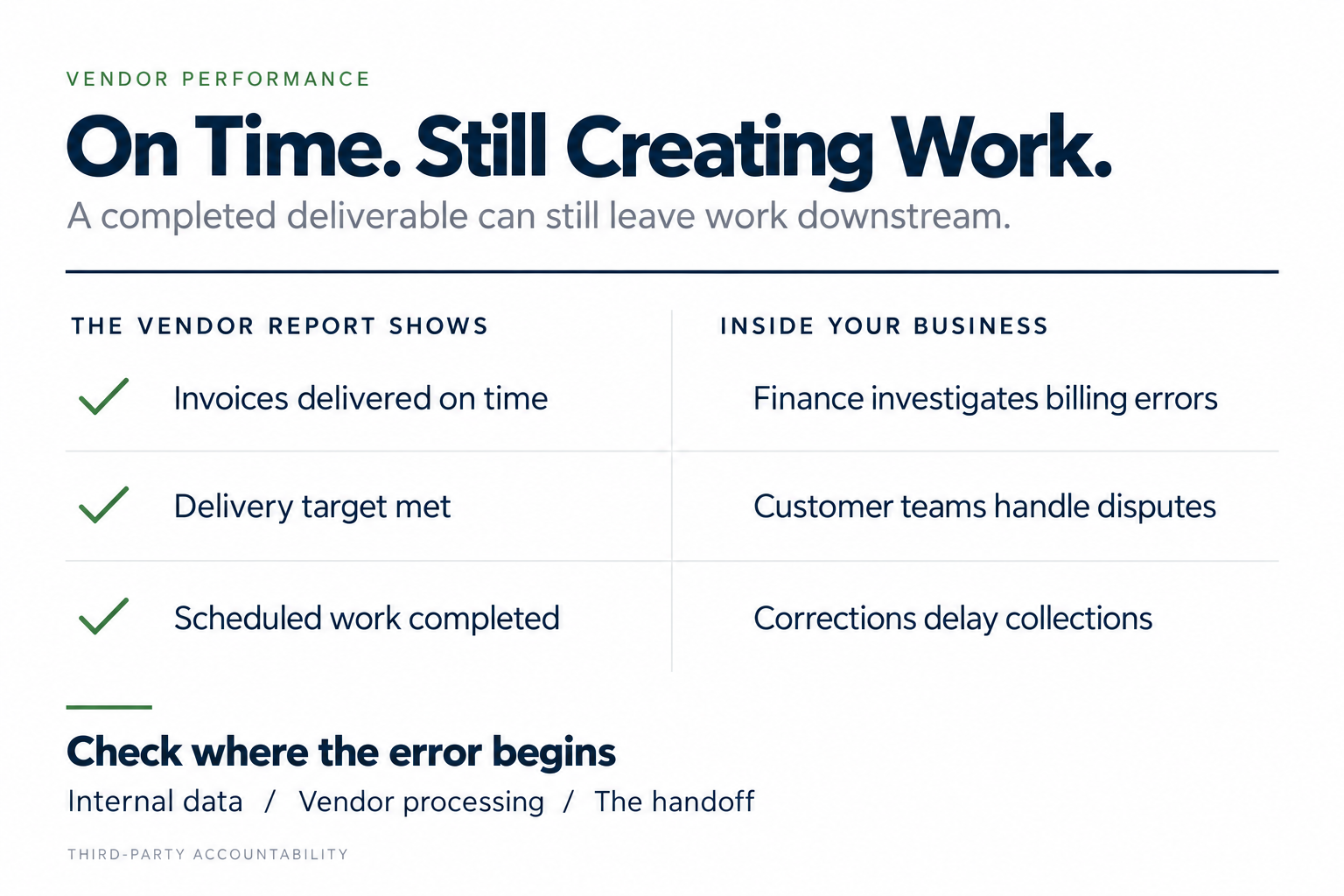
Consider a common example of a customer billing process. A billing provider sends invoices within the agreed timeframe, so its performance report shows that the invoice delivery target was met.
But recurring invoice data errors or omissions lead to customer disputes. Finance has to investigate, request corrections, and issue revised invoices. Collections take longer, and employees spend time resolving problems that never appear on the provider’s scorecard.
The vendor met a measurable obligation. The company still has a business problem.
The first step is to understand where that problem begins. The errors might originate in information supplied internally, in the provider’s processing, or in an unclear handoff between the two. Without that context, leadership could make the wrong decision about the relationship.
Follow the work to understand the cost of the outcome
The vendor contract price is visible. However, The effort required to make the service usable can be spread across internal teams, additional vendor charges, and delayed downstream work
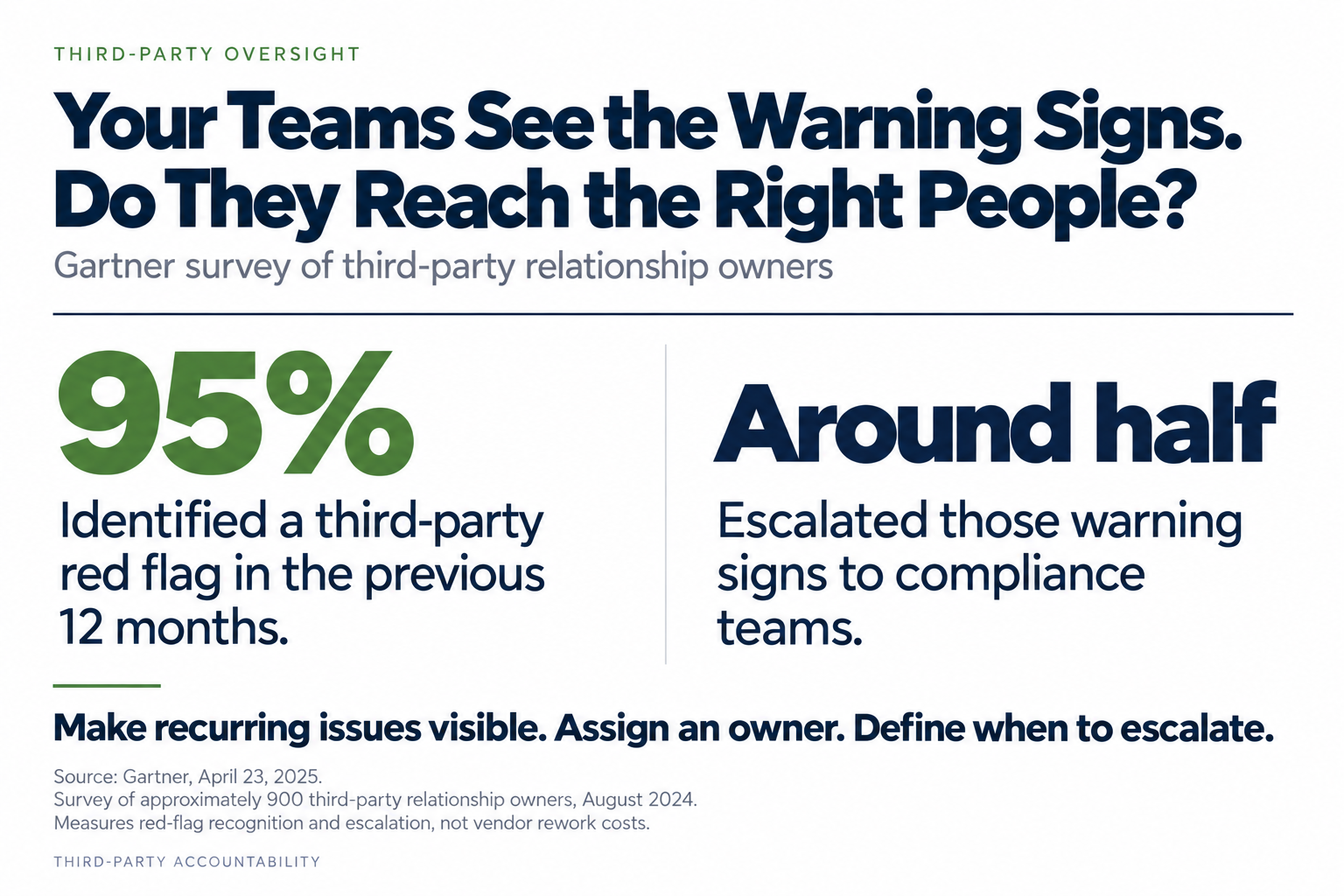
Internal operations may absorb the follow-up. Finance may handle the costs of reconciliation. Customer-facing teams may explain delays. Each team sees its own part, while leadership may not see how the recurring work connects to the vendor-supported process.
Bring those observations together to understand the process and its downstream effects:
- What work must employees repeat or correct?
- Which downstream activities are impacted and how often?
- Which area is the source of underlying problems?
- What customer commitments or financial outcomes are affected?
- Who has the authority to address the underlying problem?
Overtime or an external remediation fee is a direct expense. Time salaried employees spend on avoidable corrections can divert capacity from other priorities without increasing payroll expense. Track that capacity separately from additional spending.
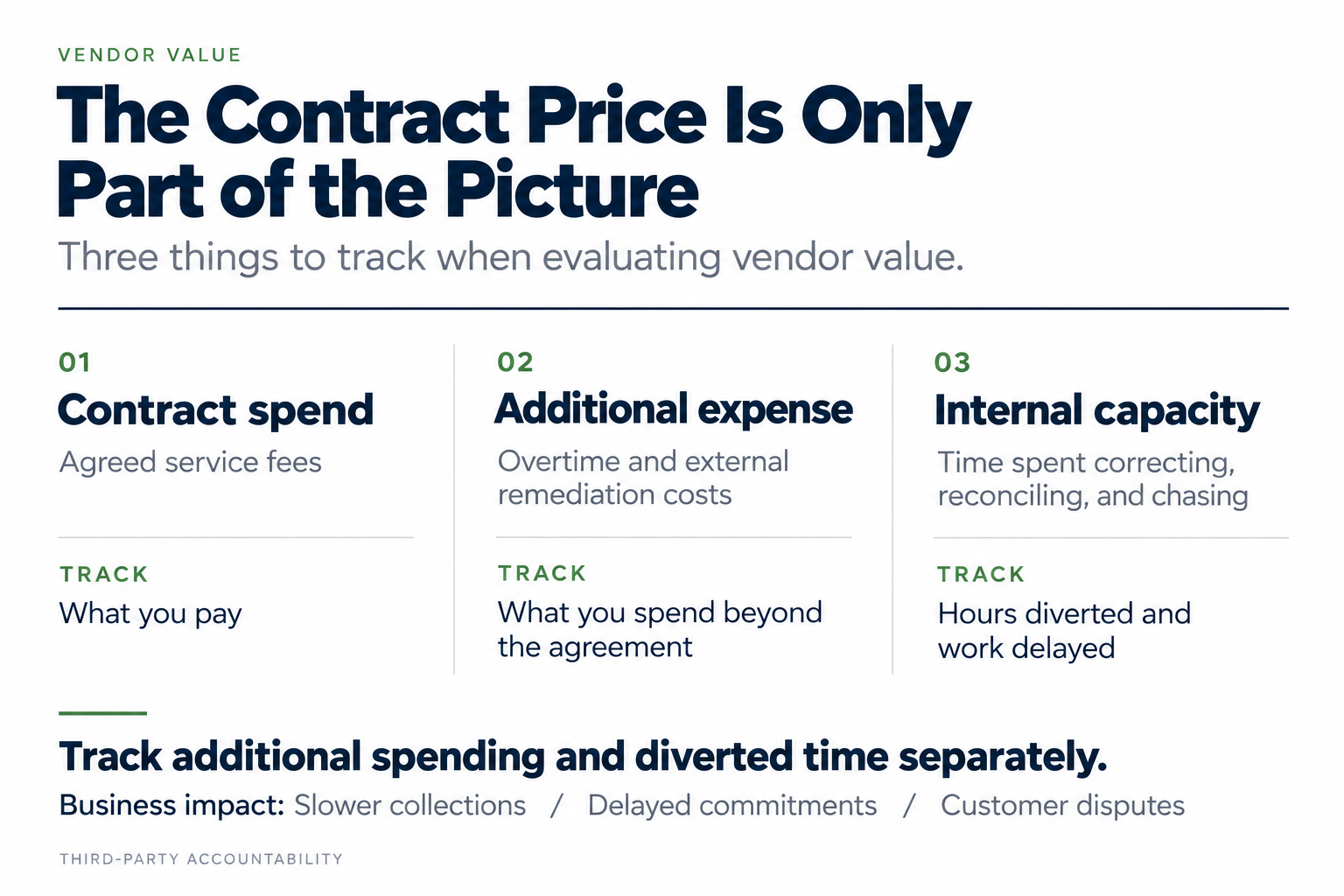
The goal is to give leadership enough evidence to decide whether the vendor relationship is delivering value and what may need to change.
Make ownership of the business outcome explicit
A vendor contact and an internal process owner serve different purposes.
The contract and service-level agreement define the vendor’s obligations. The vendor contact may coordinate a correction. An internal owner remains accountable for the business response and escalation.
In the billing example, that means identifying who tracks the pattern of errors, who evaluates the effect on collections, and who decides whether the response is sufficient. Procurement may support contractual discussions. Finance may assess the financial exposure. The operational owner coordinates the response across internal teams and the vendor, using defined decision rights and escalating contractual matters when needed.
Without that clarity, each individual issue can appear manageable while the recurring problem continues.
Employees may become very good at working around a recurring problem in the vendor-supported process. Their effort keeps the business moving, but it can also make the dependency look healthier than it is.
Ask what changed after the fix
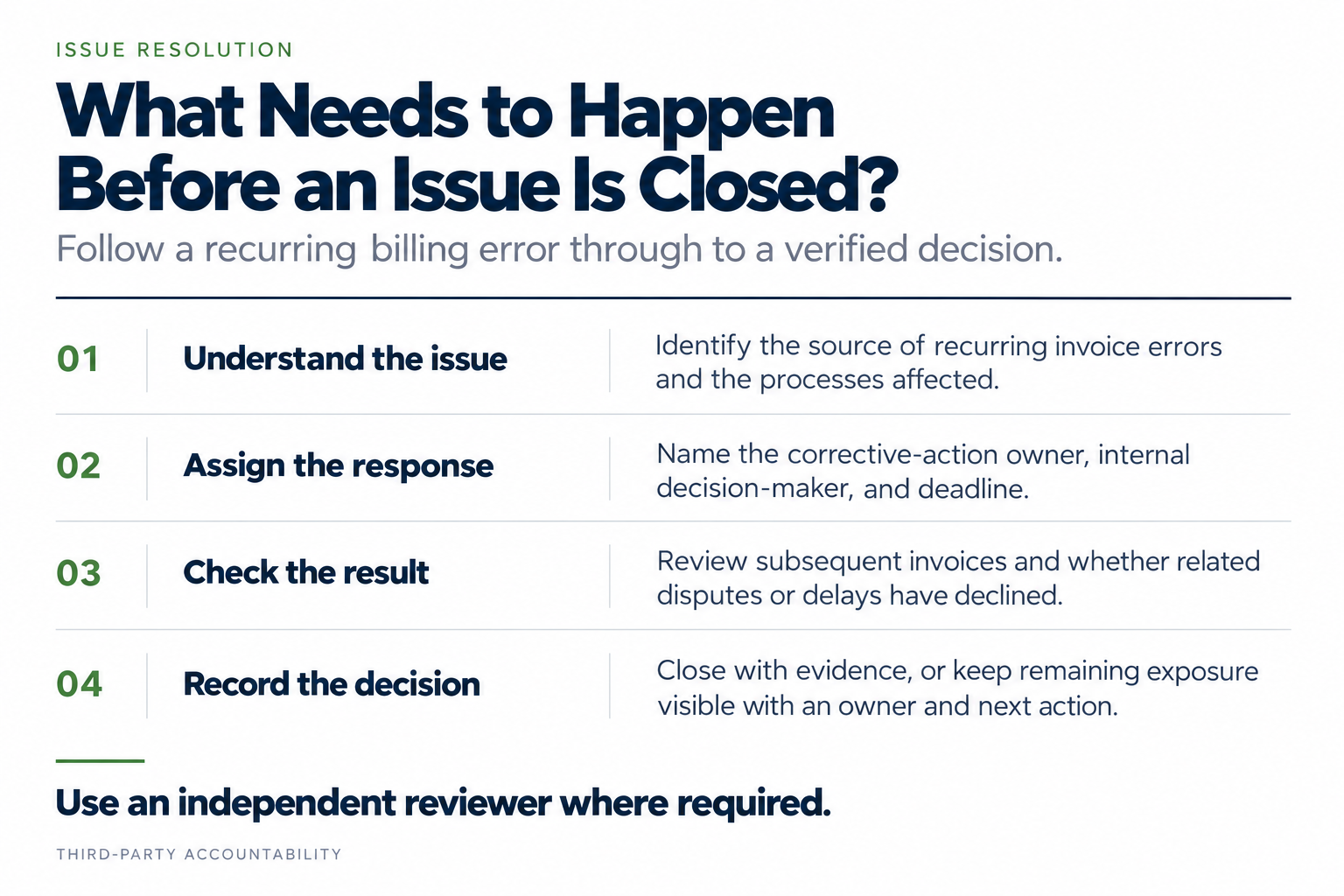
Once the source is understood, an assurance that the issue has been addressed is a starting point for verification, whether the correction was made internally or by the vendor.
With billing issues, the next review should establish whether subsequent invoices are accurate and whether disputes or delays have declined. For material issues, someone sufficiently independent of the correction should verify the result, with the review proportionate to the risk.
Any remaining exposure should stay visible, with an owner and a clear next decision. It’s common that after investigating the main issue, other contributing (external or internal) factors may surface. That might mean further corrective action, a temporary restriction, a documented exception, or escalation.
Close the issue with evidence of the result, and keep any remaining exposure visible with an owner and next action.
Give leadership a view it can act on
Vendor performance reporting becomes more useful when it connects service measures to the processes and outcomes that depend on them.
For a critical provider, leadership should be able to see recurring issues, their operational or financial consequences, the accountable internal owner, and any decision that requires attention.
A vendor contract renewal conversation can then consider more than price and contractual performance. It can examine whether the service supports the intended outcome, how much internal effort it requires, and whether unresolved issues have changed the organization’s exposure.
LogicManager’s Third-Party Risk Management solution connects vendor relationships with the business processes, risks, controls, ownership, and evidence surrounding them. That context helps leadership understand what an issue affects, who is responsible for acting, and how the response will be verified.
Before your next key vendor renewal, ask: how much work is your team doing that never appears on the vendor’s report?
If employees are correcting errors, chasing answers, or absorbing delays, that effort belongs in the vendor evaluation decision. You can outsource the process, but accountability for the outcome remains within your organization.
Before the next renewal, connect the vendor’s reported performance with the work your teams still carry, the outcomes affected, and who can act on the findings to give leadership a clearer view of where action is needed.