

When an organization launches a new software feature, the signs of success can appear straightforward. The functionality is available. Training has been completed. The process is documented. Users have been told what to do.
But that does not mean the work is actually happening as intended.
Product adoption data often reveals a very different reality. Users may begin a workflow but leave before completing it. Teams may bypass an important feature in favor of a manual workaround. Administrators may embrace a new capability while the employees responsible for day-to-day execution rarely touch it.
These behaviors are more than product usage statistics. They are early accountability signals.
They can show where expectations, workflows, ownership, and outcomes have become disconnected, often before the issue surfaces in a support ticket, renewal conversation, audit finding, or reaches executive leadership and the Board as a business issue requiring explanation.

Behavior Reveals More Than Activity
As a Product Adoption Analyst, I use Pendo to understand how customers interact with LogicManager. It helps me see which features people use, where they encounter friction, and where their behavior differs from the workflow we expected them to follow.
The specific analytics platform is not the most important part of that equation. Similar tools can collect clicks, page views, completion rates, and navigation paths.
The real value comes from what an organization is able to do with those signals.
A dashboard might show that users are abandoning a process at the same point. It might reveal that adoption varies significantly between teams or that usage declined several months after implementation. Those findings tell us what is happening, but they do not create change on their own.
Someone still needs to determine:
- Why is the behavior occurring?
- Which business process is being affected?
- Who is responsible for addressing it?
- What action should be taken?
- How will the organization know whether the response worked?
Without that structure, product analytics can easily become another collection of interesting numbers that never reaches the person capable of acting on them.
Low Adoption Is Often a Connected Business Problem
It is tempting to assume that low usage means users need more training or that the product needs to be redesigned. Sometimes those conclusions are correct. Often, however, the issue extends beyond the software itself.
Low adoption may indicate that ownership was never clearly assigned. Employees may not understand when a feature should be used or how it supports a larger objective. Different departments may have developed conflicting processes. A critical handoff may rely on an informal email, spreadsheet, or conversation that no one consistently monitors.
In these situations, the product is not simply underused. It is reflecting a gap in the organization’s operating model.
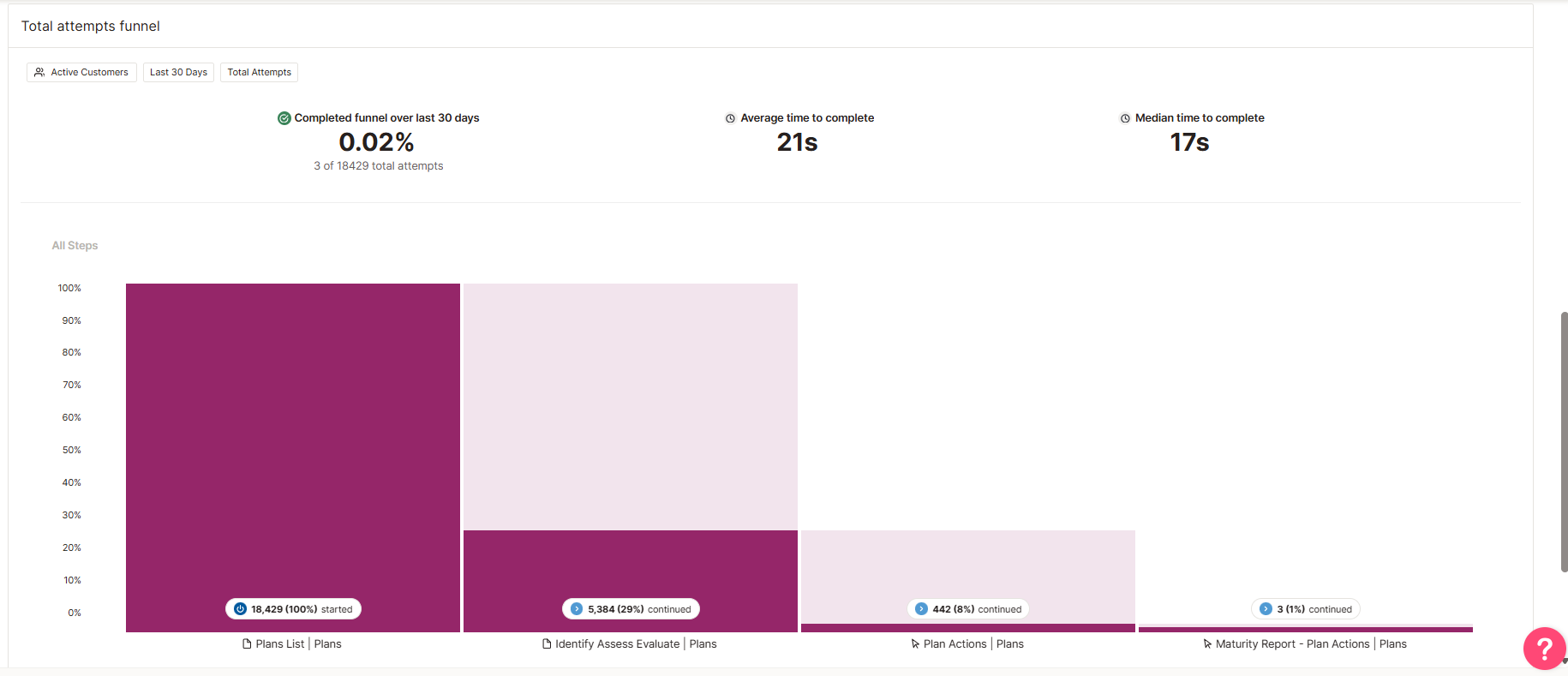
Consider a company that implements a standardized risk assessment process. The technology is available, the assessment template has been configured, and employees have attended training. Yet usage data shows that a significant percentage of assessments are started and never completed.
The organization could respond by sending another training reminder. But the data may be pointing to a more important question: What is supposed to happen when an assessment remains incomplete?
Does a manager receive an alert? Is the delay connected to a responsible owner? Can leadership see which business objectives are affected? Is there an established escalation path?
If the answer to those questions is no, the adoption problem is also an accountability problem.

Product Analytics Belongs in the Monitoring Process
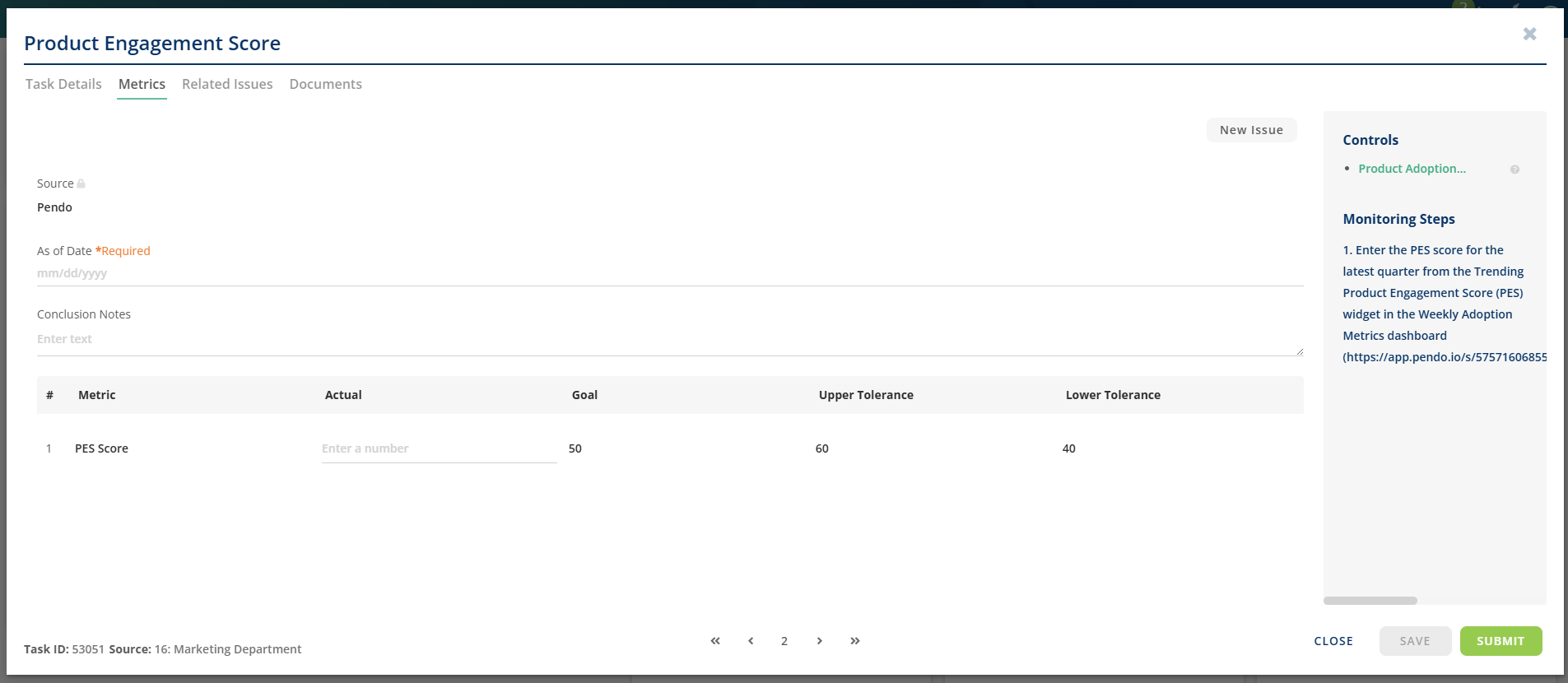
Within LogicManager’s Accountability Chain, monitoring is the link that helps an organization understand whether work is progressing as expected.
Product adoption data can strengthen that monitoring process by providing evidence of what people are actually doing,not simply what a policy, implementation plan, or process document says they should be doing.
For a risk management software company, this perspective is especially important. If we help customers create visibility into their risks, controls, responsibilities, and business processes, we also need visibility into whether customers can successfully use the technology supporting that work.
Usage patterns can act as leading indicators of control effectiveness. They may expose a breakdown before it becomes an operational disruption, audit finding, customer retention risk, or a Board-level reporting issue.
For example:
- Customers repeatedly abandon the same assessment workflow.
- Training is completed, but expected adoption never follows.
- Administrators configure a feature that end users consistently avoid.
- Usage declines after the initial implementation period.
- Teams return to spreadsheets for work the platform was designed to manage.
- A key feature is being used, but not by the people responsible for the associated outcome.
In each case, the organization already possesses valuable evidence. The challenge is ensuring that the evidence reaches the right owner and leads to a defined response.
These are “unknown knowns”: information the organization already possesses but has not connected to accountability, ownership, or executive decision-making. The evidence exists. The challenge is ensuring it reaches the right people before the issue becomes a business problem.
LogicManager Makes the Signal Actionable
This is where LogicManager becomes essential.
Product analytics can identify a pattern, but identifying a signal is only the beginning. Organizations still need a way to connect that signal to the business process it affects, the people responsible for responding, the controls intended to prevent recurrence, and the leadership responsible for oversight.
This is where LogicManager becomes essential. Rather than allowing important signals to remain isolated within dashboards, LogicManager connects operational evidence to risks, controls, ownership, accountability, and executive reporting. The result is not simply better visibility. It is a managed accountability process that helps leadership demonstrate that critical controls are working and respond quickly when they are not.
For example, imagine that analytics reveal customers are consistently bypassing an important reporting capability. That insight may require several coordinated responses:
- Product may investigate whether the workflow contains unnecessary friction.
- Customer Success may identify accounts that need additional enablement.
- Marketing may clarify how the capability supports a customer’s broader objectives.
- Support may review whether related questions are appearing in customer cases.
- Leadership may evaluate whether the trend creates adoption, retention, or operational risk.
LogicManager can provide a shared environment for connecting those perspectives. The organization can document the signal, evaluate its potential impact, assign ownership, coordinate the response, and monitor whether the intervention improves the outcome.
The analytics tool helps us detect the issue. LogicManager helps ensure the issue does not disappear between teams.
The Goal Is Not More Clicks
Product adoption work can easily become focused on increasing usage percentages. But higher usage is not automatically the same as greater value.
The real goal is to ensure that people are successfully completing the work the software was designed to support.
A feature can receive many clicks and still fail to improve a business process. Conversely, a capability used by a small, specialized group may be extremely valuable if it helps them identify risks earlier, prepare more defensible reports, or prevent important responsibilities from being overlooked.
That is why adoption metrics must be interpreted in context.
The question is not simply, “How can we make more people use this feature?”
It is, “Are the right people able to complete the right work, and does the organization have a way to respond when they cannot?”
Turning Observation Into Accountability
A Product Adoption Analyst sits at the intersection of product design, customer success, user experience, operational processes, and business outcomes.
That position makes it possible to connect behavior inside the software with the broader work customers are trying to accomplish. Analytics may reveal where users hesitate, improvise, or disengage. Conversations with other teams help explain why. LogicManager then provides the framework for turning that understanding into coordinated action.
Product adoption data does more than show where users clicked. It reveals where expectations, workflows, ownership, and outcomes may have become disconnected.
When that evidence is connected to ownership, monitoring, accountability, and executive oversight, organizations gain something far more valuable than higher adoption rates. They gain confidence that important work is actually happening.
Because leadership does not need more dashboards. Leadership needs confidence that the processes, controls, and workflows protecting the organization are functioning as intended.
Discover how LogicManager helps organizations connect insight, ownership, and action. → Check Out LogicManager’s Platform